
Asian blepharoplasty
Asian Blepharoplasty
Creation of the supratarsal crease (double eyelid) for Asian patients via surgical or suture technique.

Duration
1-1.5 hours
Anesthesia
Local anesthesia with sedation
Result
Surgical technique — permanent; suture technique — 5-10 years
Overview
Asian blepharoplasty, also known as double eyelid surgery, is one of the most-requested aesthetic procedures in Asia and among patients of Asian descent. Approximately 50% of Asians do not have a natural supratarsal crease (monolid). The procedure creates this crease, offering a more open, expressive gaze and allowing greater variety in eye makeup.
Dr. Mubariz Mammadli uses both classic surgical technique (full incision with permanent crease fixation) and suture technique (DST - double suture and twist) for patients preferring a minimally invasive approach. The position, height and shape of the crease (parallel, fan-shaped or partial) are personalized at consultation based on individual anatomy and cultural preferences.
Who it is for
- Asian patients with a monolid (no supratarsal crease)
- People with an asymmetric or inconsistent crease
- Patients wanting a more expressive, open gaze
- People with an epicanthal fold also wanting epicanthoplasty
- Patients with realistic expectations who want to preserve ethnic identity
Procedure overview
- Consultation with anatomy evaluation and discussion of desired crease style
- Rigorous symmetric preoperative marking in sitting position
- Local anesthesia with light sedation
- Full incision or placement of permanent sutures (DST technique)
- Fixation of the crease to the levator aponeurosis and fine suturing
Recovery and aftercare
- Cold compresses for 48 hours
- Persistent eyelid swelling for 2-3 weeks
- Suture removal at 5-7 days (surgical technique)
- Avoid eye makeup for 2-3 weeks
- Final crease shape at 3-6 months
Frequently asked questions
What's the difference between surgical and suture techniques?
Surgical technique uses a full incision and offers permanent results, ideal for thicker lids. Suture technique (DST) is minimally invasive with fast recovery but lasts 5-10 years.
Which crease shape is right for me?
There are three main shapes: parallel (similar to European), fan-shaped (opening laterally, more natural for Asian anatomy) and partial. Selection is made at consultation after facial analysis and discussion of preferences.
How long is recovery?
Eyelid swelling persists 2-3 weeks — longer than European blepharoplasty due to different anatomy. The final shape stabilizes at 3-6 months postoperatively.
Will I lose my natural Asian look?
Not if the crease is properly planned. The goal is a more open gaze while preserving ethnic identity, not a European transformation. We discuss the desired style in detail at consultation.
Can it be combined with epicanthoplasty?
Yes. Many patients choose to combine crease creation with epicanthoplasty (epicanthal fold correction) to further elongate the eye opening for a complete aesthetic result.
Relevant results
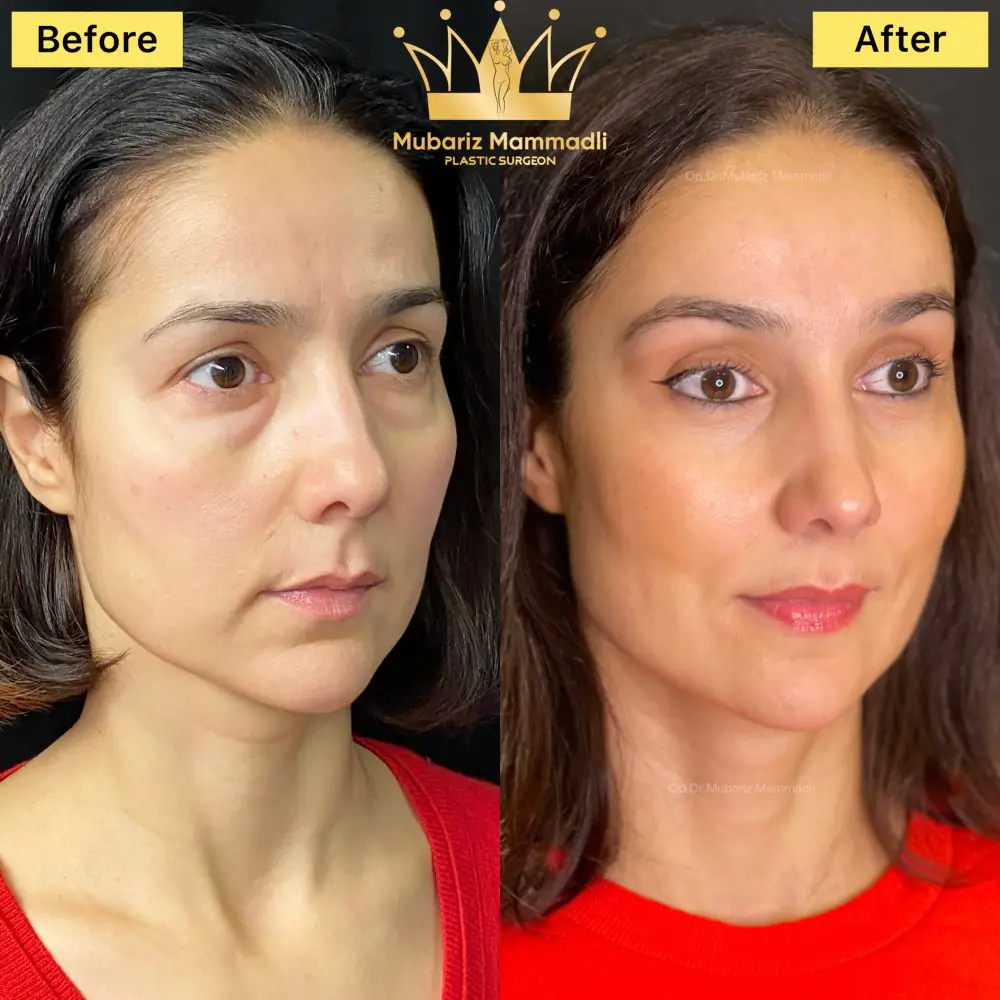
Facial harmony
Combined before and after image for discreet facial harmonization.
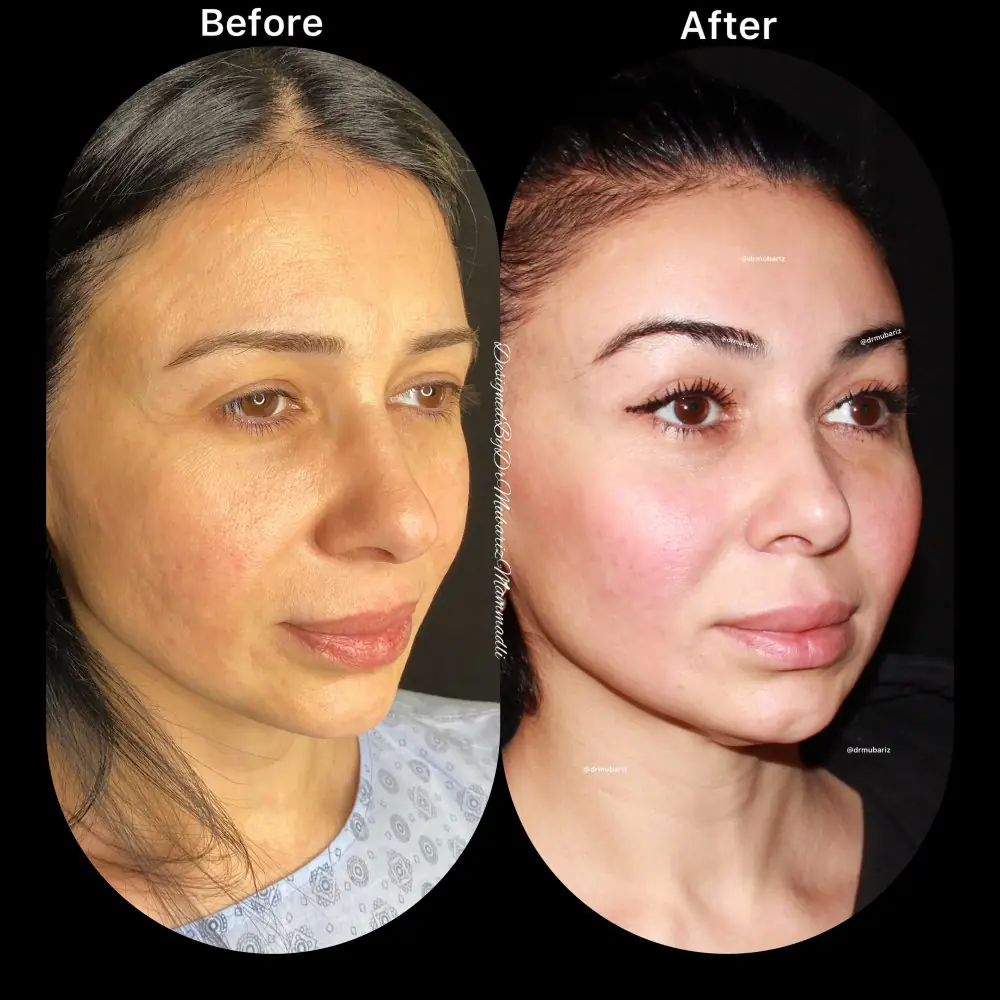
Balanced profile
Combined before and after image for profile refinement.
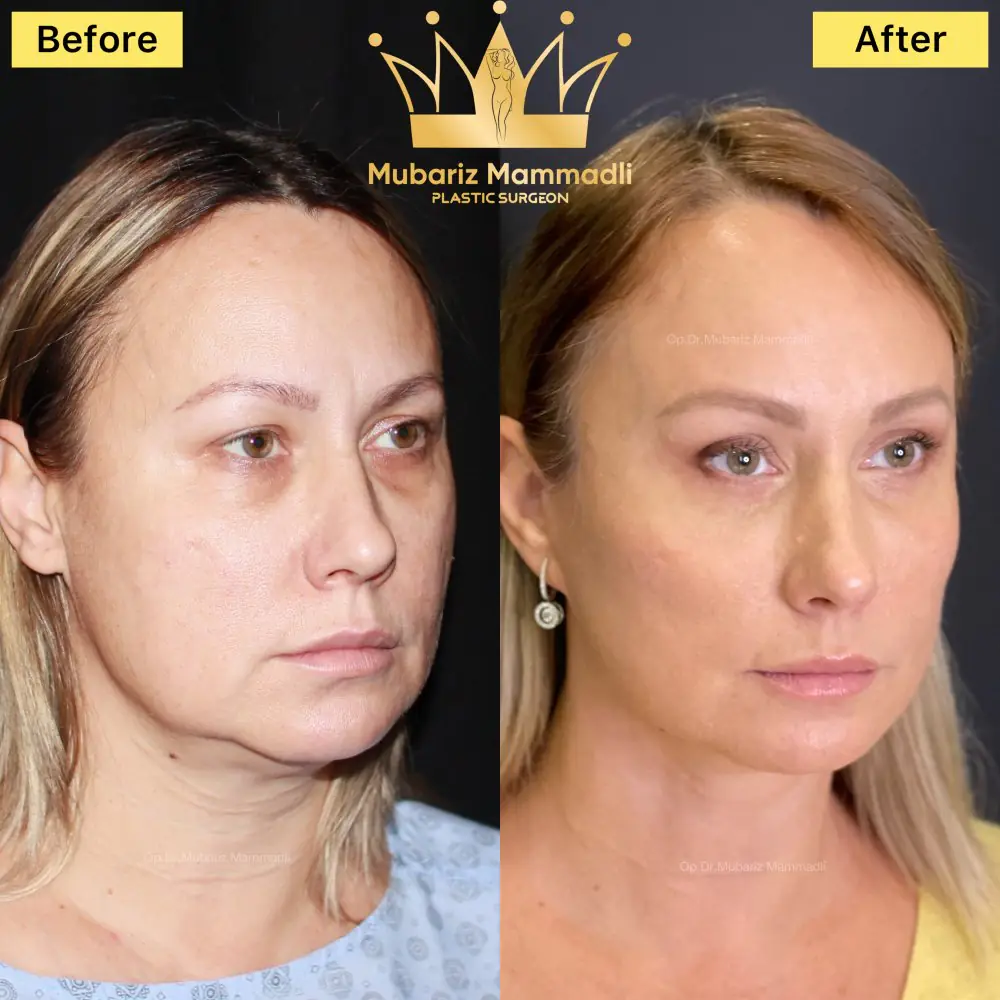
Natural contour
Combined before and after image for more balanced proportions.
Individual results may vary. Images are shared with patient consent.
Need a personalized recommendation?
Send a consultation request and receive the right next steps for your case.