
Otoplasty Surgery to Correct Natural Ear
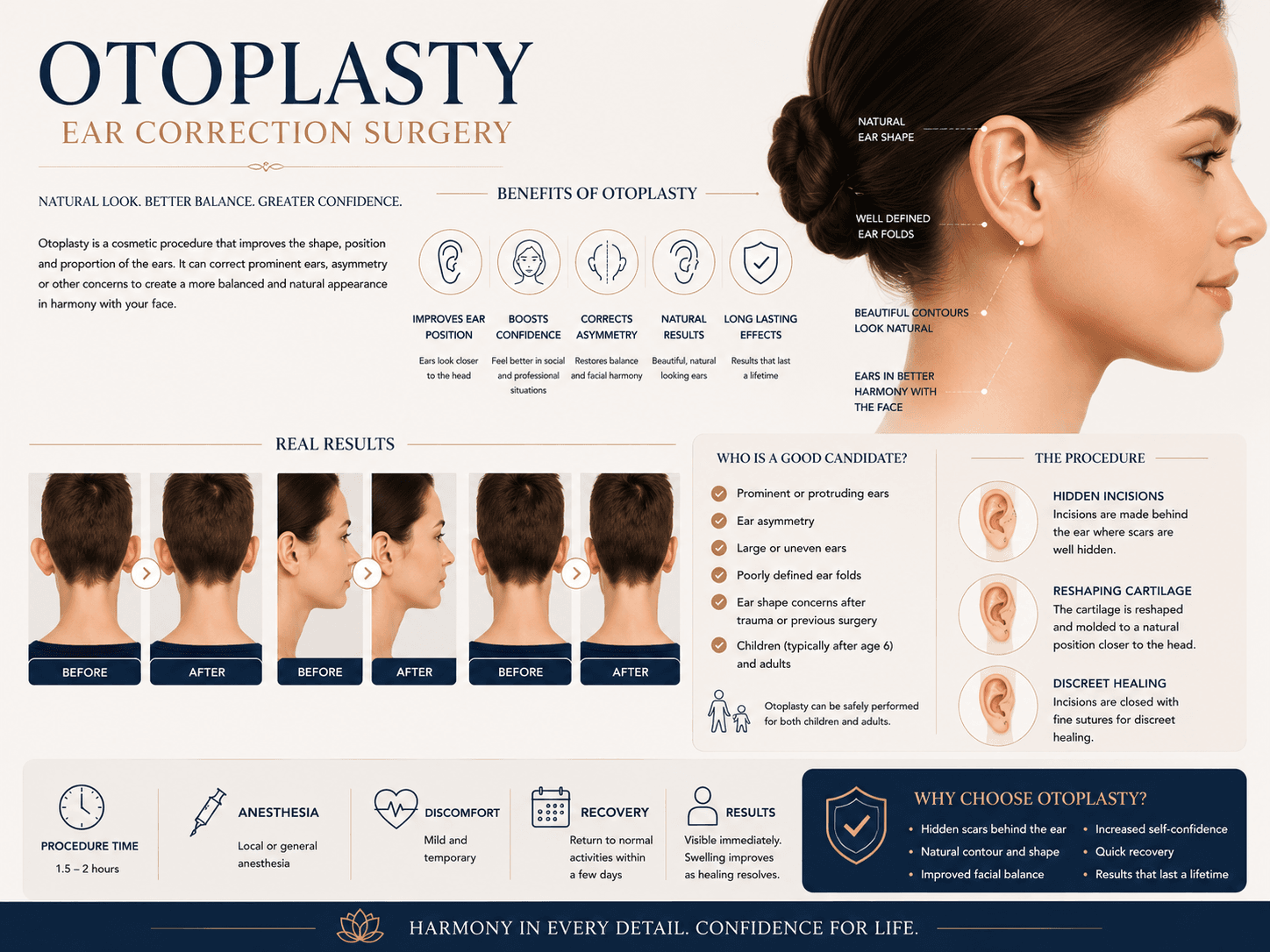
Otoplasty corrects prominent or asymmetrical ears by reshaping the cartilage and bringing the ears into better harmony with the face. Modern ear correction surgery uses hidden incisions behind the ear, creating natural results with minimal visible scarring.
Otoplasty Surgery to Correct Natural Ear
Otoplasty or ear correction surgery is a cosmetic procedure to improve the shape, position and proportion of the ears. It is commonly performed for prominent ears, asymmetry, or ears that appear too large relative to the face.
The aim of otoplasty is not to give an artificial appearance but to re-establish the natural balance between the ears and the other facial features. Small changes in the position of the ears can greatly improve the harmony of the face and self-confidence.
Otoplasty may be helpful to patients who have:
Great ears
Unequal ears
Prominent or large ears
Ill-formed folds of the ear
Ear shape issues after trauma, or surgery
The goal of contemporary otoplasty methods is to reshape the cartilage and bring the ears closer to the head, but still maintain a natural contour. The incisions are generally placed behind the ear, and the resultant scars are subtle and difficult to see.
The procedure can be performed on adults as well as children depending on the individual anatomy and emotional readiness. Recovery is generally uneventful with some swelling and mild discomfort that gradually resolves with time.
Symmetry without overcorrection is one of the most important principles in otoplasty. The best result is an ear that looks natural, balanced and harmonious with the face.
In contemporary plastic surgery, otoplasty remains one of the most effective procedures to improve self-confidence with minimal evidence of surgery.
Want a tailored opinion? Schedule a discreet consultation with Dr. Mubariz Mammadli.
Related reading
Aesthetic medicine blog
Education
How to Select a Good Plastic Surgeon
Choosing a good plastic surgeon means choosing safety, experience, trust, and natural results. A qualified surgeon explains realistic expectations, risks, recovery, and creates a personalized plan based on the patient’s anatomy, not trends or exaggerated beauty standards.
Education
Surgery vs. Minimally Invasive: Which Is Better?
Minimally invasive treatments are ideal for prevention, small corrections, and fast recovery, while surgery is recommended for deeper tissue descent, excess skin, and long-lasting structural results. The best aesthetic outcome comes from choosing the right method at the right time.

Education
"I Don't Want to Look Operated": The New Face of Beauty
“I don’t want to look operated” has become the new standard in modern aesthetic surgery. Today’s patients seek natural beauty, refined facial harmony, and elegant rejuvenation. The best result preserves identity and creates a fresher, younger, more rested appearance.