
Rhinoplasty Nose Surgery for Facial Harmony
Rhinoplasty nose surgery for natural facial harmony. Aesthetic and functional correction, natural results and balanced proportions with the rest of the face.
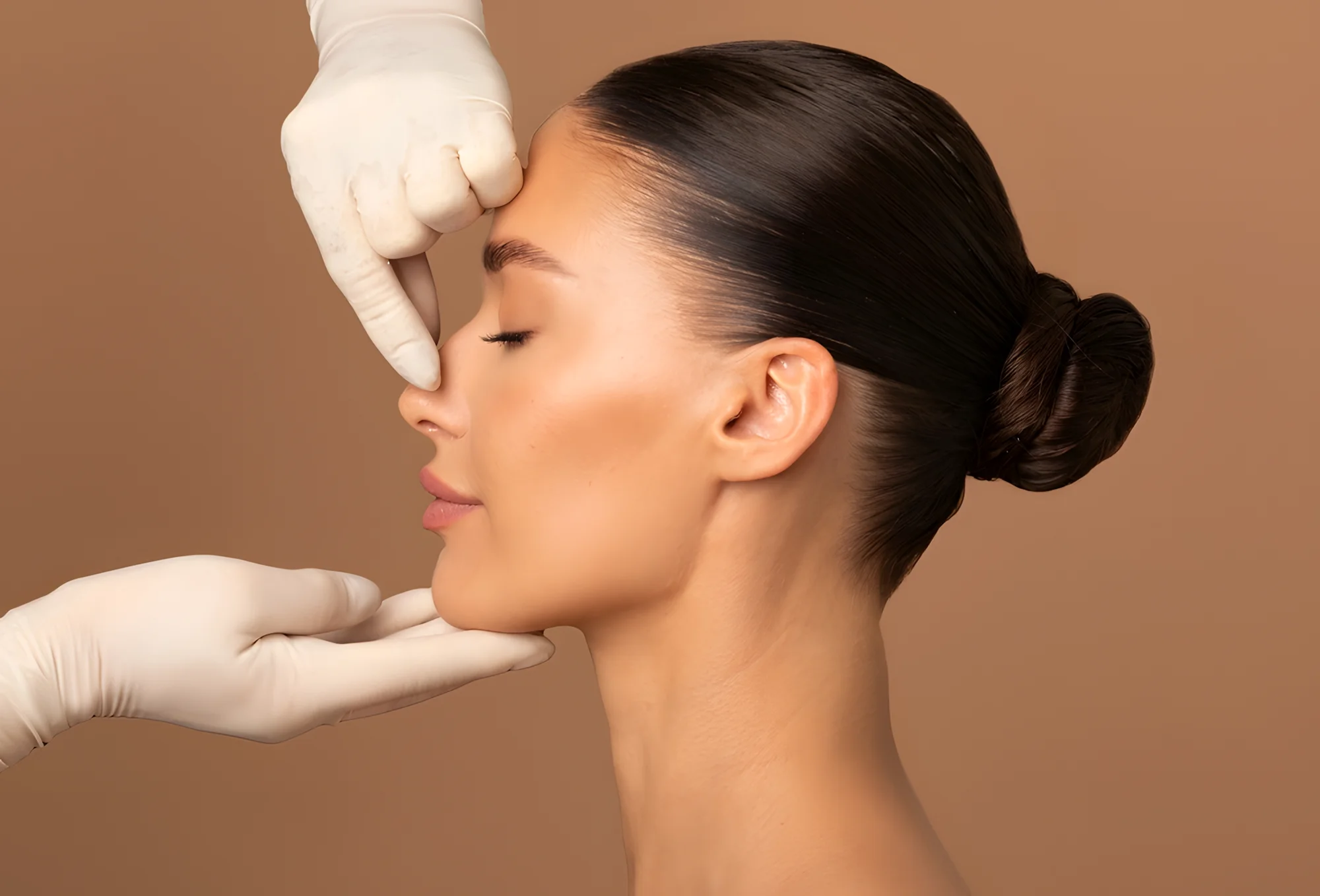
Rhinoplasty Nose Surgery for Facial Harmony
Rhinoplasty is one of the most complex and sought-after procedures in facial aesthetic surgery. The nose is the central element of the face. Its shape, size and proportions directly influence the harmony of the entire face. A well-performed rhinoplasty does not change identity. It refines and balances natural features.
What Is Rhinoplasty?
Rhinoplasty is nose reshaping surgery. It can modify:
Nose size and projection
Nasal tip shape
Width and shape of the nostrils
Nasal hump
The angle between nose and upper lip
Overall nasal symmetry
Septal deviations — in functional rhinoplasty
Rhinoplasty can be aesthetic — to improve appearance — or functional — to correct breathing problems. Frequently, both goals are addressed simultaneously.
Types of Rhinoplasty
Open rhinoplasty. The incision is made at the base of the columella — the skin between the nostrils. Provides maximum visibility of nasal structures. Allows more complex and precise corrections. The scar is small and well hidden.
Closed rhinoplasty. All incisions are made inside the nose. No visible external scars. Suitable for more limited corrections. Slightly faster recovery.
Revision rhinoplasty. Corrects unsatisfactory results from a previous rhinoplasty. More complex and requires superior surgical experience.
Functional rhinoplasty. Corrects septal deviations, turbinate hypertrophy or other structural problems affecting breathing.
What Can Rhinoplasty Correct?
Rhinoplasty addresses a wide range of aesthetic and functional concerns:
Nasal hump — reduction of dorsal prominences
Nasal tip — refining, lifting or defining the tip
Wide nostrils — reducing the width of the nasal base
Deviated nose — correcting visible asymmetry
Nose too large or small — adjusting proportions
Nasolabial angle — improving the angle between nose and lip
Septal deviations — correcting breathing problems
The Relationship Between Nose and Other Facial Features
The nose cannot be analysed in isolation. It must be evaluated in the context of the entire face. The balance between nose, chin, cheekbones and jawline is essential.
Rhinoplasty is therefore frequently combined with:
Genioplasty — to balance the facial profile
Deep Plane Facelift — for complete facial rejuvenation
Facial fat grafting — for facial volume restoration
Blepharoplasty — for harmony between eyes and nose
An experienced surgeon always evaluates the face as a whole — not just the nose in isolation.
Planning Rhinoplasty
Careful planning is essential for a successful result. The consultation includes:
Detailed analysis of nasal structure
Evaluation of global facial proportions
Discussion of goals and expectations
Digital simulation of possible results
Assessment of respiratory function
Selection of the appropriate surgical technique
A good surgeon listens carefully. Explains realistically what is possible. Sets clear and accurate expectations.
The Surgical Process
Anaesthesia. Rhinoplasty is usually performed under general anaesthesia. Complete patient comfort is ensured.
Incision. Open — at the base of the columella. Or closed — inside the nose. Depends on the complexity of the correction required.
Reshaping. The surgeon repositions, sculpts or removes nasal cartilage and bone. Cartilage grafts may be added for support or additional volume.
Closure. Incisions are carefully sutured. An external splint is applied for support and protection.
The procedure typically takes 2–3 hours.
Recovery After Rhinoplasty
Recovery after rhinoplasty is gradual:
Nasal splint worn for 7–10 days
Swelling and bruising around the eyes for the first 1–2 weeks
Temporary nasal congestion — normal in the first weeks
Return to social activities after 2–3 weeks
Avoid strenuous physical activity for 4–6 weeks
Avoid glasses on the nose for 4–6 weeks
Visible results after 3–6 months
Final results after 12 months — as swelling completely resolves
Scarring After Rhinoplasty
Open rhinoplasty leaves a small scar at the base of the columella. This scar:
Is practically invisible in normal position
Fades progressively over 6–12 months
Becomes largely invisible over time
Closed rhinoplasty leaves no visible external scars.
Risks and Complications
Rhinoplasty is a safe procedure when performed by an experienced surgeon. Possible risks include:
Prolonged swelling
Asymmetry
Temporary breathing difficulties
Inadequate scarring
Need for revision surgery
An experienced surgeon minimises these risks through careful planning and precise technique.
Who Is the Ideal Candidate?
Rhinoplasty suits patients who:
Have completed facial growth — usually after 18 years
Have clear aesthetic or functional concerns
Have realistic expectations
Are in good general health
Understand that final results appear after 12 months
Trends in Rhinoplasty 2026
Current trends are moving away from very small or excessively modified noses. Patients are seeking:
Natural and harmonious nose
Proportions balanced with the rest of the face
Ethnic rhinoplasty — preserving individual characteristics
Precision rhinoplasty — not volume
Invisible results
Conclusion
Rhinoplasty is a highly precise procedure. It can transform facial harmony subtly and elegantly. Performed by an experienced surgeon, it delivers natural, lasting and harmonious results — complementing and refining the natural beauty of each patient.
FAQ — Rhinoplasty
What is rhinoplasty? It is nose reshaping surgery. It corrects the size, shape, projection and symmetry of the nose. It can be aesthetic, functional or both simultaneously.
What is the difference between open and closed rhinoplasty? Open rhinoplasty has a small incision at the base of the columella. It provides maximum visibility for complex corrections. Closed rhinoplasty has all incisions inside the nose. No visible external scars.
What problems can rhinoplasty correct? Nasal hump, undefined nasal tip, wide nostrils, deviated nose, unbalanced proportions and septal deviations affecting breathing.
Does rhinoplasty affect breathing? Functional rhinoplasty improves breathing. It corrects septal deviations and turbinate hypertrophy. Aesthetic and functional goals can be addressed simultaneously.
From what age can rhinoplasty be performed? Usually after 18 years — when facial growth is complete. In functional cases, the age can be younger with medical approval.
How long is recovery after rhinoplasty? The splint is worn for 7–10 days. Swelling and bruising resolve within 1–2 weeks. Social activities resume after 2–3 weeks. Final results after 12 months.
When are final results visible? Visible results after 3–6 months. Complete final results after 12 months — as swelling completely resolves.
Will there be visible scars? Open rhinoplasty leaves a small scar at the base of the columella. Practically invisible in normal position. Fades over 6–12 months. Closed rhinoplasty leaves no external scars.
Can it be combined with other procedures? Yes. It combines well with genioplasty, Deep Plane Facelift, fat grafting and blepharoplasty for complete facial harmony.
Who is the ideal candidate for rhinoplasty? People over 18 with clear aesthetic or functional concerns, realistic expectations and good general health — who want natural and harmonious nasal proportions.
Want a tailored opinion? Schedule a discreet consultation with Dr. Mubariz Mammadli.
Related reading
Aesthetic medicine blog
Education
Anaesthesia in Facelift Surgery Types and Safety
Anaesthesia in facelift surgery types, safety and preparation. Complete guide on general anaesthesia, sedation and what to expect before surgery.
Education
Questions to Ask Before a Facelift Complete Guide
Essential questions to ask before a facelift. Complete consultation guide — surgeon, procedure, risks, recovery and realistic results explained.

Education
When Can You Return to Exercise After a Facelift?
When can you return to exercise after a facelift? Complete recovery guide with stages, permitted activities and tips for optimal and lasting results.