
Transconjunctival Lower Blepharoplasty
Transconjunctival lower blepharoplasty rejuvenates the lower eyelid without visible scars. Natural results, faster recovery and preserved eyelid function.
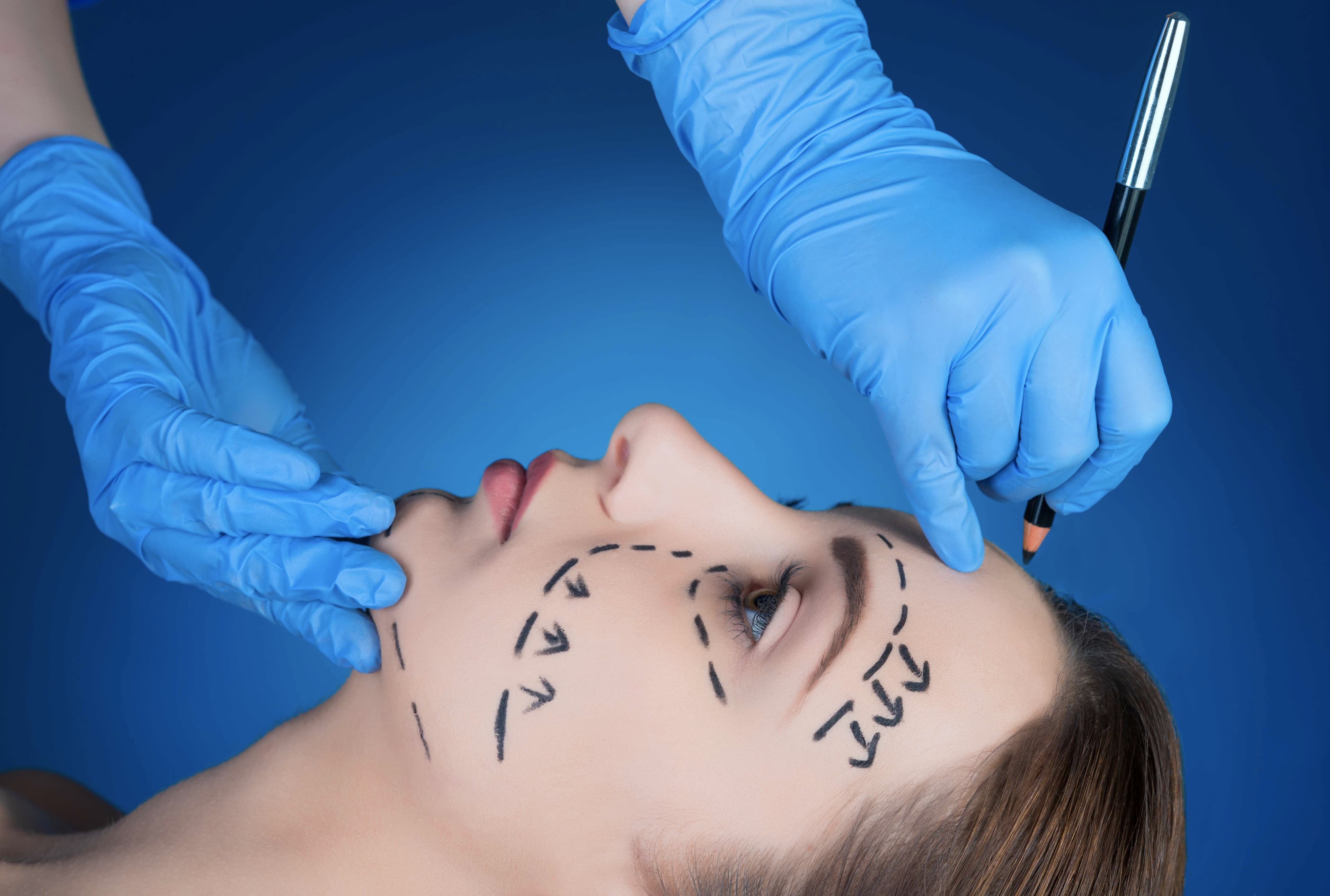
Transconjunctival Scarless Lower Blepharoplasty
A transconjunctival lower blepharoplasty is an elegant surgical approach. It rejuvenates the lower eyelid without visible external scars. No skin incision is required. The orbital fat compartments are accessed through the inner lining of the eyelid — the conjunctiva.
This is different from the standard transcutaneous technique. That method requires an incision just below the lash line. The transconjunctival approach leaves no external marks.
Who Is It Best For?
This technique suits younger patients with good skin elasticity. It is ideal for patients who have:
Bags under the eyes caused by fat prolapse
Good skin tone and texture
No significant excess skin
No large wrinkles around the eyes
Mild to moderate tear trough deformity
Patients with significant skin redundancy may need additional procedures. These include laser resurfacing, chemical peeling or skin pinch excision.
Lower Eyelid Anatomy
The lower eyelid is a complex structure with several distinct layers:
Skin — the thinnest skin on the body
Orbicularis oculi muscle — responsible for eyelid closure
Orbital septum — fibrous membrane enclosing the orbital fat
Three fat compartments — medial, central and lateral pockets
Capsulopalpebral fascia — retractor of the lower eyelid
Conjunctiva — mucous membrane covering the inner surface
The transconjunctival route uses the natural plane between the conjunctiva and capsulopalpebral fascia. It gives direct access to the fat compartments without disturbing the anterior layers.
Indications
The ideal candidate has:
Lower eyelid fat herniation causing periorbital bags
Excellent to good skin tone and texture
No significant skin redundancy
Mild to moderate tear trough deformity
No significant lower eyelid laxity
A thorough assessment is essential before proceeding. Not every patient is suitable for this technique alone.
Preoperative Planning
Careful planning is essential for a successful outcome. Preoperative assessment includes:
Complete ophthalmologic examination
Assessment of lower eyelid tone and laxity
Snap test and distraction test
Standardised lighting photographs
Identification of predominant fat compartments
Documentation of orbital anatomy and tear trough morphology
Assessment of any pre-existing eyelid asymmetries
Every detail matters. Accurate planning leads to precise surgical execution and natural results.
Anaesthesia
The procedure is performed under local anaesthesia with intravenous sedation. It can also be performed under general anaesthesia in a day-surgery setting.
Local infiltration of the conjunctiva uses a vasoconstrictor — usually 2% lidocaine with epinephrine 1:100,000. This reduces bleeding and improves visualisation during surgery.
The Incision
A transconjunctival incision is made 4–5 mm below the inferior tarsal border. Two approaches are available:
Postseptal approach. The incision passes directly through the conjunctiva into the postseptal fat. It is the most direct route. Preferred for simple fat removal or repositioning. Faster and less complex.
Preseptal approach. Dissection is performed between the orbicularis muscle and the orbital septum. Allows better access for fat repositioning and tear trough correction. More technically demanding but offers greater precision.
The choice of approach depends on the patient's anatomy and the surgical goals.
Fat Management — Three Strategies
The management of orbital fat is the central step of the procedure. Three strategies are used depending on the patient's anatomy and desired outcome.
Fat excision. A small amount of herniated fat is clamped, excised and cauterised. Precision is critical. Removing too much creates a hollow, skeletal appearance. Less is more.
Fat repositioning — Arcus Marginalis Release. The orbital septum is released from its attachment at the orbital rim. The herniated fat is allowed to drape over the orbital rim into the tear trough depression. This corrects the nasojugal groove without any volume loss. It is the gold standard of modern lower blepharoplasty. Natural volume is preserved. Results look refreshed — not hollowed.
Fat preservation with structural support. In selected cases, fat is neither excised nor repositioned. It is preserved in place after structural support of the septum. This approach suits patients where volume loss is a primary concern.
Closing the Incision
The conjunctival incision can be closed with absorbable sutures — typically 6-0 plain gut. It can also be left unsutured to heal naturally. The conjunctiva heals rapidly and reliably without formal closure. Both methods produce excellent results.
Combined Procedures
Transconjunctival blepharoplasty is frequently combined with other procedures for more complete periorbital and facial rejuvenation:
CO2 laser skin resurfacing. Tightens lower eyelid skin. Reduces fine lines and improves texture. Ideal for patients with mild skin laxity.
Chemical peel — TCA or phenol. Improves skin tone, texture and quality. Complements the surgical correction effectively.
Hyaluronic acid filler injections. Replaces remaining volume loss in the tear trough. Refines the result non-surgically.
Canthopexy or canthoplasty. Preserves the lateral canthal tendon. Prevents lower eyelid retraction. Essential in patients with any degree of eyelid laxity.
Upper eyelid surgery — upper blepharoplasty. Achieves complete periorbital rejuvenation. Upper and lower eyelid surgery together creates a fully balanced and rested appearance.
Midface lift. Corrects malar descent. Improves the lid-cheek junction. Addresses the deeper structural causes of lower eyelid ageing.
The right combination depends on each patient's anatomy, degree of ageing and personal goals.
Postoperative Care
Recovery is straightforward and well-tolerated by most patients. Key postoperative instructions include:
Cold compresses for the first 48 hours to reduce swelling and bruising
Topical antibiotic eye drops or ointment for 5–7 days
Sleeping with the head elevated
No strenuous physical activity for 2–3 weeks
Sun protection with UV-blocking glasses
Artificial tears for temporary dryness or irritation
Bruising and swelling resolve within 10–14 days in most patients. Final cosmetic results are fully appreciated at 6–8 weeks postoperatively.
Risks and Complications
Transconjunctival blepharoplasty is a safe procedure. Complications are uncommon. They can include:
Persistent unilateral swelling or oedema
Conjunctival swelling — chemosis — or haematoma
Transient diplopia from local anaesthetic effect on extraocular muscles
Aggravation of dry eye syndrome
Transient lower eyelid retraction
Over- or under-correction of fat
Infection, corneal injury or visual disturbance — rare
The transconjunctival technique significantly reduces the risk of lower eyelid retraction and ectropion. These are the most feared complications of the transcutaneous approach. This safety advantage is one of the primary reasons the technique has become the preferred standard.
Results and Patient Satisfaction
Transconjunctival lower blepharoplasty — especially when combined with fat repositioning — delivers natural and long-lasting results. Patient satisfaction is consistently high.
Patients choose this technique for several key reasons:
No external scarring
Shorter recovery time
Preserved eyelid mechanics and function
Natural, rested appearance
Long-lasting and stable results
In modern aesthetic surgery, properly selected patients consistently prefer this approach. It offers the ideal combination of effectiveness, safety and natural outcome.
Conclusion
Transconjunctival lower blepharoplasty is one of the most refined techniques in modern facial surgery. It corrects periorbital bags, refreshes the under-eye area and improves overall facial harmony — without a single visible scar.
When performed by an experienced surgeon with careful planning and precise fat management, the results are transformative. The eyes look rested, open and naturally youthful. The patient looks like themselves — just more refreshed.
FAQ — Transconjunctival Lower Blepharoplasty
What is transconjunctival lower blepharoplasty? It is a surgical technique that removes or repositions lower eyelid fat through the inner lining of the eyelid. No skin incision. No visible external scars.
How is it different from traditional lower blepharoplasty? Traditional blepharoplasty requires an incision below the lash line. The transconjunctival approach accesses fat through the inside of the eyelid. No external cuts. Lower risk of complications.
Will there be visible scars? No. All incisions are made inside the eyelid. There are no external visible scars.
Who is the ideal candidate? Younger patients with good skin elasticity who have bags under the eyes. Suitable for those without significant excess skin or large wrinkles.
What causes bags under the eyes? Bags are caused by herniated orbital fat. Fat pushes forward from its normal compartments. This creates a puffy or tired appearance under the eyes.
What fat management options are available? Three options: fat excision, fat repositioning and fat preservation. Fat repositioning — arcus marginalis release — is the gold standard of modern practice.
Can it be combined with other procedures? Yes. It combines well with CO2 laser resurfacing, chemical peel, fillers, canthopexy, upper blepharoplasty and midface lift for complete periorbital rejuvenation.
How long is recovery? Bruising and swelling resolve within 10–14 days. Final results are fully visible at 6–8 weeks postoperatively.
What are the risks? Persistent swelling, chemosis, transient diplopia, dry eye aggravation or minor eyelid retraction. Serious complications are rare.
What are the main advantages? No visible scarring, shorter recovery, preserved eyelid function and natural long-lasting results. Patient satisfaction is consistently high.
Want a tailored opinion? Schedule a discreet consultation with Dr. Mubariz Mammadli.
Related reading
Aesthetic medicine blog

Education
Facelift and Smoking -What You Need to Know
Facelift and smoking what you need to know. Risks, complications and how long to stop smoking for optimal results and correct healing after surgery.

Education
Liposuction and Abdominoplasty Body Contouring
Liposuction and abdominoplasty for complete body contouring. Remove fat, loose skin and repair abdominal muscles natural and lasting results in Romania.

Education
Anaesthesia in Facelift Surgery Types and Safety
Anaesthesia in facelift surgery types, safety and preparation. Complete guide on general anaesthesia, sedation and what to expect before surgery.