
atypical blepharoplasty
Atypical Blepharoplasty
Advanced techniques for complex cases: severe fat herniation, asymmetries or revisions after prior surgery.
Duration
2-4 hours
Anesthesia
General or local anesthesia with sedation
Result
Stable result at 6-9 months; lasting correction
Overview
Atypical blepharoplasty addresses cases that cannot be solved with standard technique: pseudo-ptotic lids, multiple fat herniations, postoperative deformities (ectropion, lower lid retraction, scleral show) or congenital asymmetries. Dr. Mubariz Mammadli combines reassembly of periorbital structures with autologous tissue grafts when needed.
Each case follows an individualized plan, often combining transcutaneous and transconjunctival approaches, fat repositioning into the tear-trough and orbicularis suspension. The goal is to restore correct periorbital anatomy and achieve a natural result without any operated stigmata.
Who it is for
- Patients with unsatisfactory results after previous blepharoplasty
- People with severe fat herniation or marked pseudo-ptosis
- Patients with postoperative ectropion or scleral show
- People with congenital or acquired periorbital asymmetries
- Patients needing reconstruction of support structures
Procedure overview
- Detailed analysis with photos, tarsal evaluation and snap-back test
- General or local anesthesia with deep sedation
- Combined transcutaneous and transconjunctival approach as indicated
- Fat repositioning, orbicularis suspension and canthal reinforcement
- Skin or temporal fascia grafts in reconstructive cases
Recovery and aftercare
- Cold compresses and compressive dressing for 24-48 hours
- Edema more persistent than standard blepharoplasty, up to 3 weeks
- Artificial tears for 4-6 weeks to protect the cornea
- Avoid sun exposure for 2-3 months
- Frequent follow-ups during the first 6 postoperative weeks
Frequently asked questions
What is atypical blepharoplasty?
It is a blepharoplasty planned individually for cases that don't fit the standard technique — either due to a previous surgery with unwanted results or due to complex anatomy.
Can an unwanted result from a previous blepharoplasty be corrected?
Yes. Revision blepharoplasty is an important part of this procedure. Tissue repositioning techniques and autologous grafts are used to correct ectropion, retraction or asymmetry.
How long is recovery?
Recovery is longer than standard blepharoplasty, generally 14-21 days before returning to social activity. The final result stabilizes in 6-9 months.
How does it differ from classic blepharoplasty?
Atypical blepharoplasty involves additional techniques: fat repositioning, suspension of support structures, autologous grafts or combined transconjunctival and transcutaneous approaches.
Is the result permanent?
Structural corrections are lasting. Natural aging continues, but the deformities addressed by surgery do not recur identically.
Relevant results
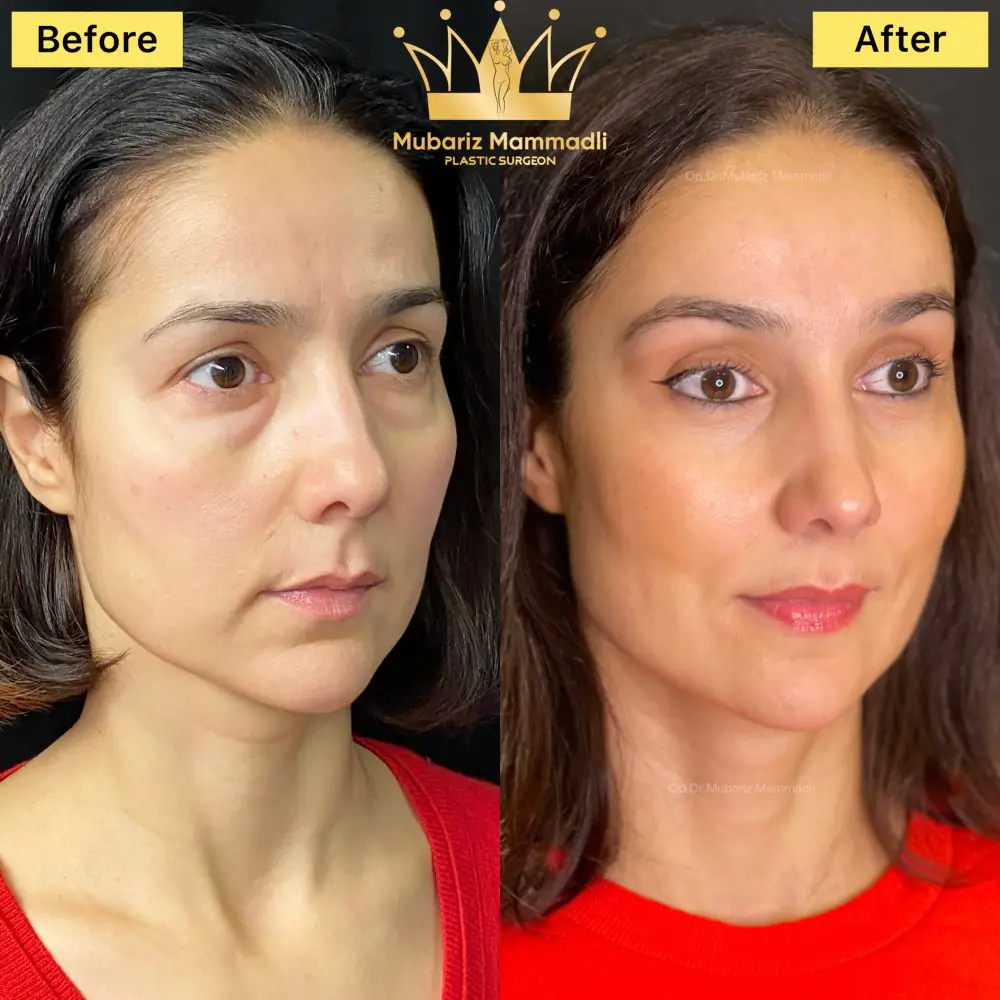
Facial harmony
Combined before and after image for discreet facial harmonization.
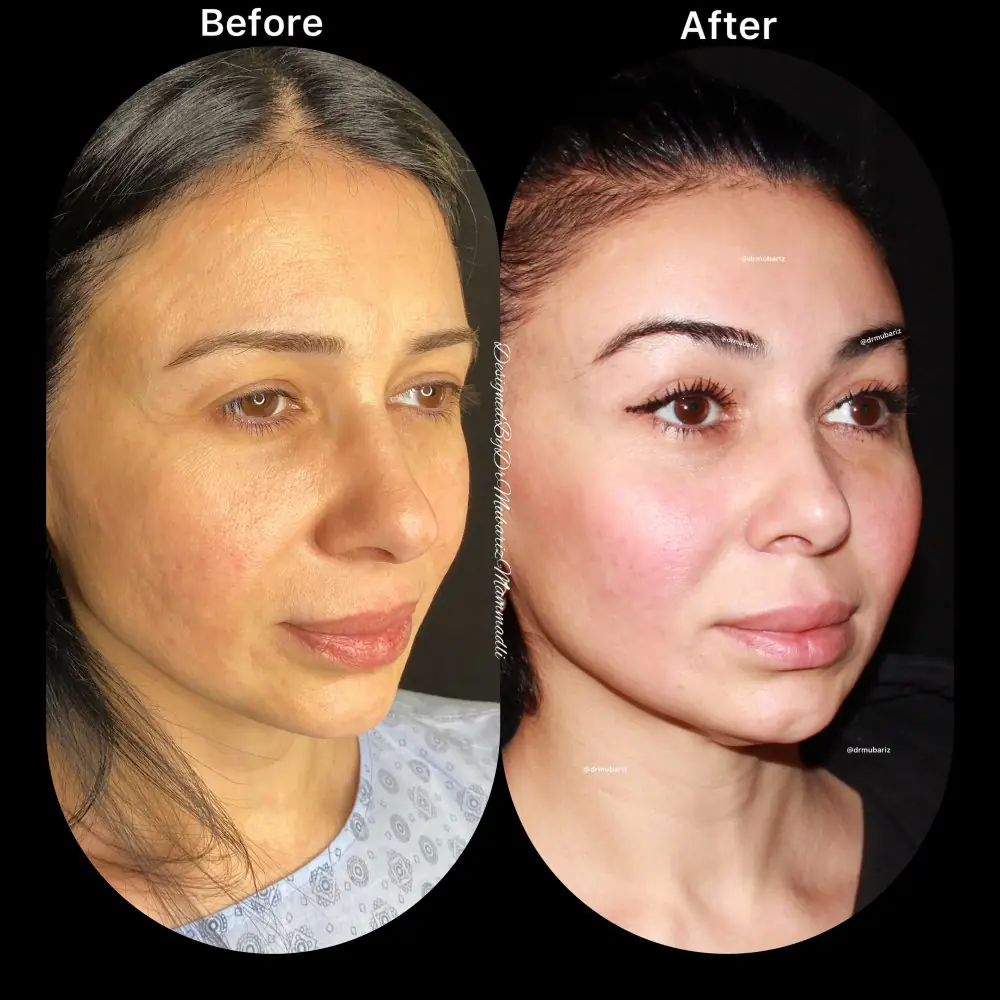
Balanced profile
Combined before and after image for profile refinement.
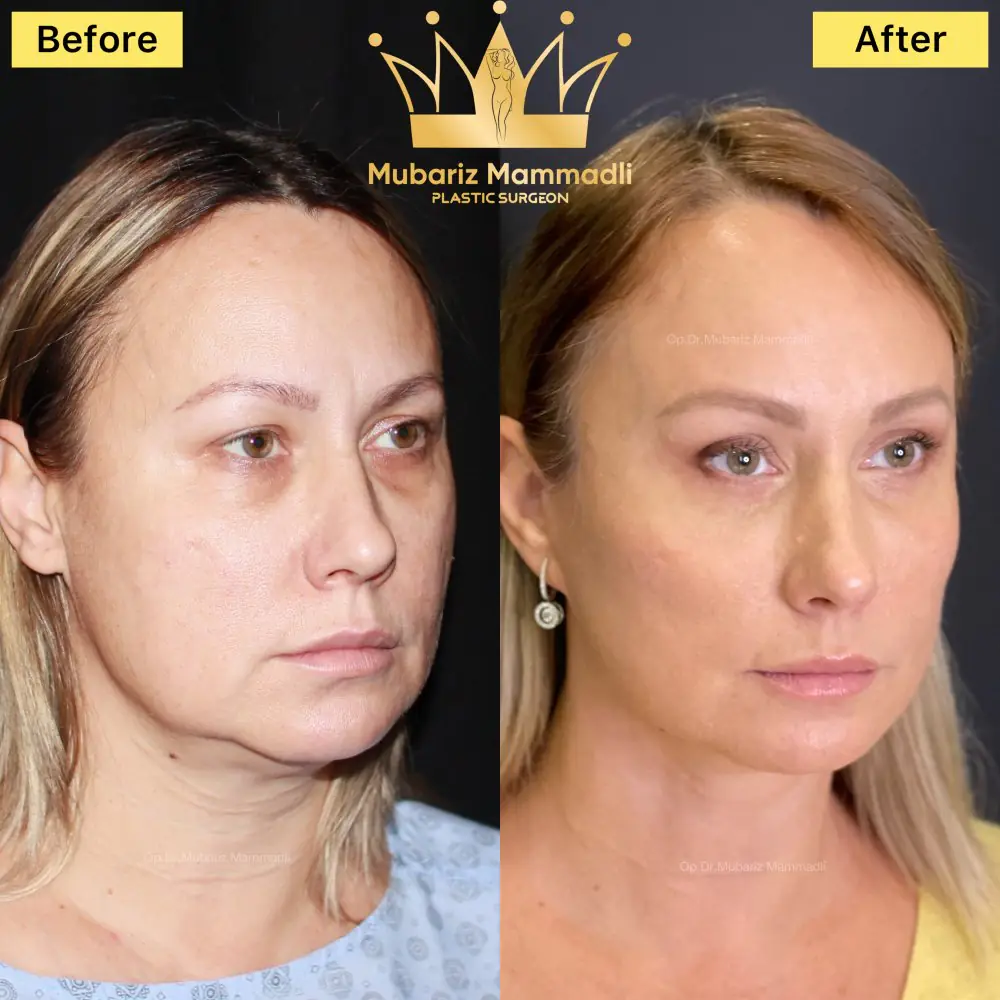
Natural contour
Combined before and after image for more balanced proportions.
Individual results may vary. Images are shared with patient consent.
Need a personalized recommendation?
Send a consultation request and receive the right next steps for your case.